Sunday, November 12, 2017

Making My Own Fluxx Card Game! - Weekly blog #10

Image result for fluxx
Amazon.com
Summary

This week in science, I learned about a game called Fluxx. We were given a task to recreate this game catering to a certain topic in science. My partner and I chose the topic of the human body systems. I learned more about human body systems than I ever did before. These are facts such as communications between the brain and different organs of your body, as well as how organs in the same system are codependent of each other. I also learned how to better use google tools including google sheets and google drawings. I also now know how to make nice looking cards that can be used to play with. This includes using card-stock, applying laminate, and a logo to be put on the back.

S&EP - Constructing Explanations

Through this project, I was able to construct explanation on how organs in body systems work together and what allows communication between different parts of the body. With the keeper cards and goals, I was able to set explanations about different connections between our body systems. Through these cards, I can provide a fun game that also can teach people all sorts of thing about the different human body systems and connections between them. This is how I constructed explanations this week in science

XCC - Structure and Function

There are vast amounts of examples regarding structure and function when it comes to the human body system. There is a sense of structure built into each of our body systems because several organs are joined together in a way that requires structure to operate. There is function because these organs and body systems rely on one another in order to function. There is also several tasks given to certain organs in order to make a functioning body. This is why structure an function is present in the different human body systems.

Sunday, November 5, 2017

Designer Species: Project Blog

Drawing of our species
Summary

In this project, I learned how different animals use their adaptations to help them out in the wild. I learned about this through researching the different traits that might be beneficial to our animal. Through this, I was able to learn how the blowholes of dolphins work, how the reproductive system of a frog is like, and how seals keep themselves warm. Through the designer species project, I also learned how to create an engaging, and informational video. I also learned how to better use the green screen effect through the green screen that we filmed on.

Backward Looking - In what ways have you gotten better at this kind of work?


I believe that I got better at this type of work because I learned how to better make a drawing as a representation of collections of ideas. This allowed me to have a better understanding of the importance of teamwork and collaboration to share ideas. I also learned how to get better at making video that are informational and also entertaining. I also leaned how to better film with real cameras, as well as how to do green screen effects.


Inward Looking - What was especially satisfying to you about either the process or the finished product?


I guess what was especially satisfying as the end result of the project was the collection of different types of products that we made for the project. I like the fact that we did an animatic, as well. as a detailed sketch/model. This way, we were able to express different versions of the same product.This was especially satisfying at the end because  we got to see lots of collections in different ideas coming together. Another thing that was especially satisfying at the end was the video quality. Even though the audio lacked in quality, I liked how we were able to use a variety of shots and angles. 

Outward Looking - Did you do your work the way other people did theirs? In what ways did you do it differently? In what ways was your work or process similar?

We did our work differently then other in a variety of ways. Even though our methods were different in presentation, we all had the same concepts, for some the same planet. The reason why our methods were different then other was due to us wanting to do something a little out of the box. Because of this, we decided to do a video instead of a presentation, which pretty much everyone else was doing. We also included a different type of detailed sketch, because in a way that detailed sketch was like a model, in the sense that it could stand up on its own, and used all sorts of materials. We were similar to other groups because we all made animals that were, in some way, adapted to their environments and. 

Forward Looking - What would you change if you had a chance to do this piece over again?

If I were to do this piece over again, I would redo the filming on a lot of the shots. I say this because the audio on all of the shots that we did after the restaurant scene had a lot of background noise in it. Also, the green screen didn't come out very good on those shots, and was pretty hard to work with. I would also probably try and add more texture to our detailed sketch/model. I say this because we were originally going to add all sorts of material onto the sketch but ended up not having enough time for it. These are thing that I would change if I were to do this over again.

Sunday, October 29, 2017

Making My Own Species! - Weekly blog #9

Image
http://mariana68.wixsite.com/evolution/designer-species
Summary

This week in science, I worked on my designer species project. So far, in this project I was able to create a concept on what our animal could be like. We were able to chose out of a few planets that our species could be from. We decided on planet C, a tropical planet that features plenty of vegetation, as well as animals such as birds, insects, and snakes. Knowing the information of the planet that we chose, we were able to think of traits that could be potentially useful in the environment. From their my team and I created a chart listing the advantages and disadvantages that certain traits presented, and which one we would like to include in our animal. From there we created another table that listed the body systems of the animal, and took different systems from different animals that we thought shared a similar system. Through this, I learned about all sorts of systems from different animals. 

Sunday, October 22, 2017

Learning About Cladograms - Weekly Blog #8

Image result for cladogram
https://bursakietad402.wordpress.com/illustrating-evolutionary-relationships/
Summary

This week, I learned about cladograms, and how scientists use them to organize data about common traits among animals. Cladograms are designed in a linear fashion to represent the growing complexity of trait, and the possible connections between animals. Cladograms allows scientists to examine possible common ancestors between animals and the traits that those common ancestors shared. Cladograms allow you to organize traits and allow you to find the most common traits among species. This can be especially useful because animals are complex in their traits, and as species evolve, it can be very difficult to find commonality between them.

S&EP - Using Models

This week, I was able to use models, such as cladograms, to find similarities between animals and how they connect to each other through common ancestors. on e example of this is the trying to find the most common ancestor of the T-Rex. The first thing that I had to do was make the cladogram and put the most basic trait in the beginning, in this case being vertebrae. I used a chart to help organize which animals had the most common traits to the T-Rex. Then, I was able to narrow it down further into 2 main species that could possibly be the closest common relatives. Those species were the Caiman and Parrot. I was then able to get more specific with traits that might be common with the T-Rex. In the end, the Parrot had the most common traits with the T-Rex, making it the most common ancestor.

XCC - Patterns 

Patterns can be very visible in cladograms. I say this because cladograms all present a sense of connection between species, and all follow the pattern of having the most specific shared traits at the top of the line, and the most basic traits at the bottom. This pattern can help scientists further examine specific traits that are present in a species, and how it compares to others. The pattern is universal, in the sense that all cladograms follow it and definitely help figure out common ancestors between species.


Sunday, October 15, 2017

Evidence of Evolution - Weekly Blog #7

Related image
https://nondiscovery.wordpress.com/2008/09/11/intelligent-design-lacks-evolutions-web-of-evidence/
Summary

This week in science, I learned about the evidence that we did, in fact, come from a common ancestor. The main evidence of evolution that we studied this week were fossil records, embryology, and comparative anatomy. With this data, I was able to learn how, and why we are all connected through evolution. This can be seen in our comparative anatomy by just looking at the skeletal structure of animals compared to each other. It shows that we all have very similar structures in different areas of the body. It is also shown that when developing, our embryology is also very similar to each others. The early stages of the process can be hard to tell apart. Finally, the fossil records show how we are connected through evolution by giving evidence that past organisms that resembled us may be signs of a common ancestor, and help fill gaps of knowledge between evolutionary lines.

S&EP - Using models

This week, we explored usage of models to help us understand how evidence in evolution can be found through fossil records. We did this by making a list of the "Adventurian" fossils starting in Cambrian era. It started as one type of fossil, but eventually branched off into grey heads, and white heads, and even further into different types of species as a whole. Through this exercise, using models helped me better understand how fossil records give evidence of evolution and help close gaps in evolution.

XCC - Stability and Change

This week, I saw the concept of stability and change present in our studies. I say this because when studying the Adventurian fossil record, I was able to see change in during each epoch. Every time that a new fossil is present, there is that sense in change present in the pattern of the fossils. It shows that the organisms had to have a sense of stability if they are evolving in such a way that can aid them in the long run. This can also be seen when comparing the embryology or skeletal structures of different animals. There has to be a sense of stability within the systems, and change depending on the organisms needs. 

Sunday, October 8, 2017

Studying Natural Selection: Weekly Blog #6

Image result for natural selection
https://answersingenesis.org/natural-selection
Summary

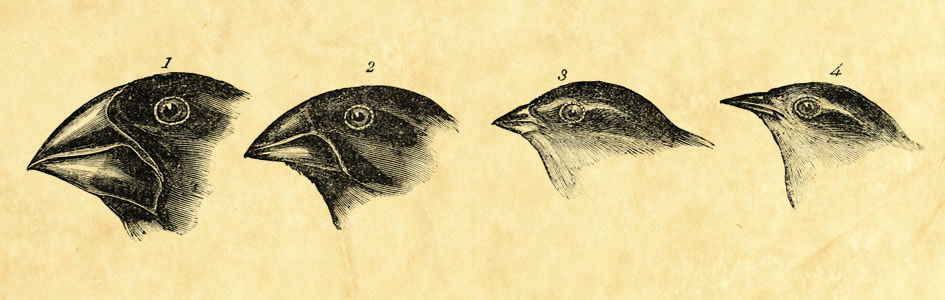
This week in science, I learned how natural selection impacts the world today, and how it occurs. Natural selection is when certain traits are passed onto offspring to be the most fit for the environment. Natural selection is the only kind of evolution that leads to adaptations among a  species. Charles Darwin is the one that discovered these occurrences while in his studies. He did his expedition on the HMS beagle, and made a book named the origin of species. On his expedition, he found finches from different islands. Darwin studied these finches, and concluded that they all came from a common ancestor. Darwin also noticed that each of the finches were varied in their physical characteristics to fit their certain environments. This was most prominent in their beaks shape and size. Their was different types of foods growing in the island they inhabited, so in order to survive their beak shapes changed to what was necessary for consumption of food.

S&EP - Using Models

I used models to explain and predict behaviors of systems when I did the finches lab. In this lab we took the roles of different types of finch beaks to pick up different materials. This shows an example of how the finch beaks were different from each other, and were strongly suited in some areas but not others. This gives an example of natural selection due to some finch beaks being better than others at certain tasks. It was shown through the data that we collected from a model that the beaks and had strengths and weaknesses, depending on the type of food they were collecting.

XCC - Cause and Effect

A great example of cause and effect would have to be in the peppered moths. The situation of the peppered moths dates back to the first industrial revolution when there was smog covering the trees. Before this, the bark trees used to be white, and a great environment for the peppered moths. This was because of their ability to camouflage in these trees due to their light colored patterns. When the smog came along and made the white bark trees black, the white spotted moths had a hard time surviving, due to them being easily spotted. Because there wasn't only white colors within their genes, the dark moths started to only reproduce and fit better in their habitats. This is a great example of cause and affect because when the moths were white, the effect was them being able to camouflage. Another cause and affect scenario is when the trees got covered in smog, the affect was the black colored moths reproducing and making them hard to spot once again.

Sunday, October 1, 2017

Studying Evolution: Weekly Blog #5

Image result for evolution
https://steemit.com/science/@herpetologyguy/the-biggest-misunderstandings-about-evolution
Summary:

This week in science, we began our studies on evolution. This week we also revisited the ideas of evolution and mutations.